I recently reviewed the balance sheets of several growing startups. I found a structural issue that cuts into runway. It is a $2M fixed-cost marketing team. These organizations maintain massive full-time overhead that cannot pivot when acquisition costs spike or seasonal demand shifts. For Series A to C companies, traditional hiring can create risky human capital debt. It can make a full-time CMO a liability when your priority is the next growth milestone.
The structural failure of the ‘all-in’ marketing hire
Recruiting for specialized roles takes months. By the time the hire is onboarded, the market has often shifted. Fixed payroll becomes a structural liability when revenue is seasonal or ad costs fluctuate. Organizations require a team that scales with growth, rather than a team that eats margin during slow quarters. A fractional marketing team gives you flexibility to stay lean. This helps you choose which marketing roles justify full-time investment and which fit variable specialists. Adopting this model allows a business to refine its D2C marketing strategy by focusing on efficiency rather than headcount.
Adopting agile structures with fractional leaders allows brands to pay for output rather than attendance. By using remote-first workflows, teams can keep high quality work without a physical office or costly benefits packages. However, founders must choose the right cost framework for startups. This helps avoid coordination friction common in traditional agency models. When hiring marketing experts, the focus remains on their specific domain mastery rather than proximity to a headquarters.
The agile scaling framework: A modular blueprint
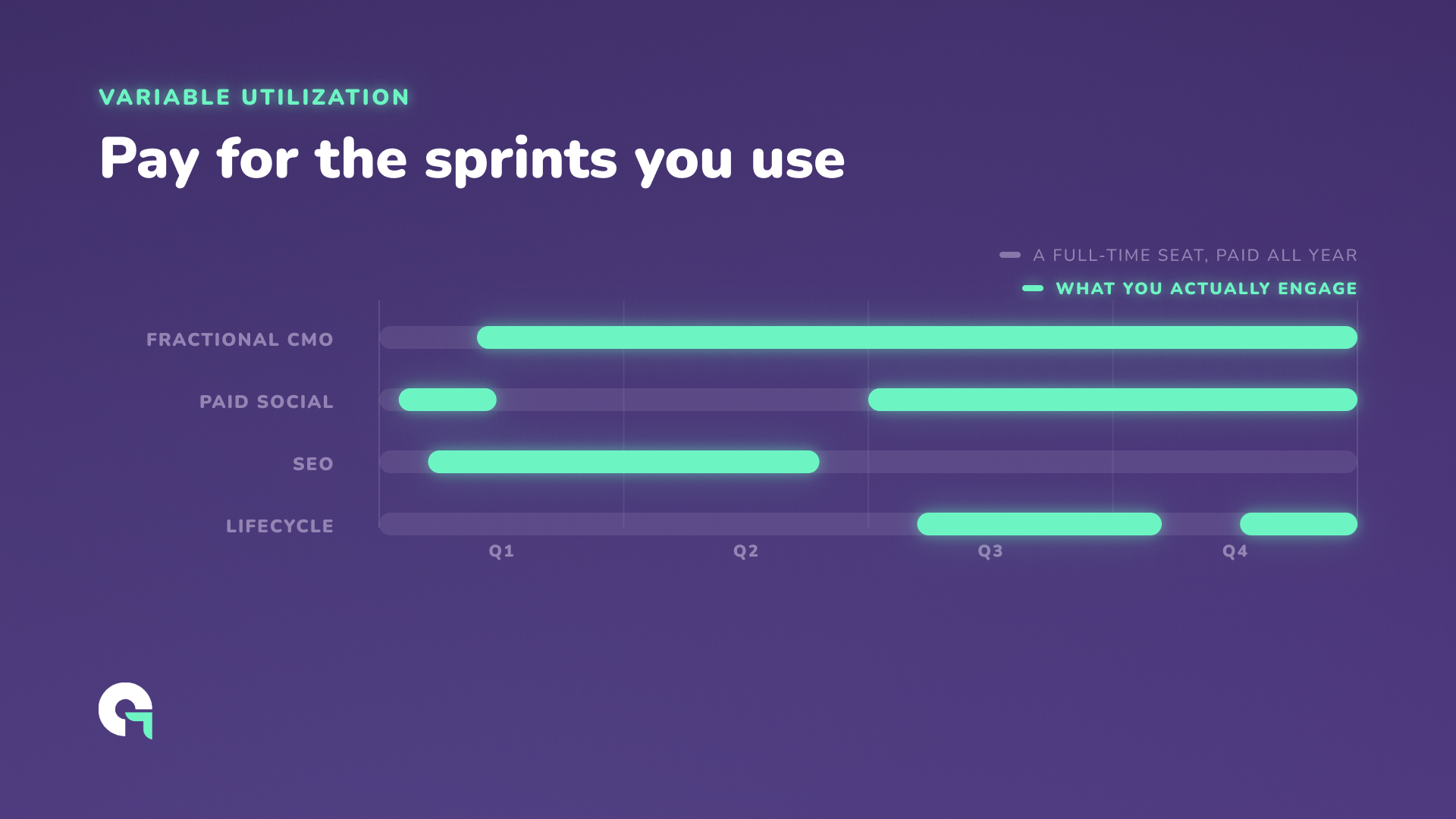
To implement a sustainable agile marketing framework, brands must move toward a modular talent blueprint. This approach has clear benefits. Fractional marketing models can drive up to 29% revenue growth. This helps businesses that adopt agile structures (Hire VA).
- The Strategic Head: A fractional CMO who sets the roadmap and manages unit economics. Success requires a high-velocity 30-day framework focused on immediate ROI and technical audits.
- The Execution Arms: Vetted specialists for Paid Social, SEO, and lifecycle marketing. Many of these specialists prefer flexible remote marketing jobs. These roles let them work with top-tier brands worldwide.
- Variable Utilization: Scale hours up during peak seasons and down during consolidation phases.
- Data Integrity: Using fully-loaded rate calculations to ensure every dollar spent on talent drives a return by accounting for hidden management overhead.
Readiness by the numbers
- CAC Spikes: When acquisition costs rise, you may need CRO or creative experts fast. This helps maintain technical execution and data integrity.
- Seasonal Scaling: If 60% of your revenue comes in Q4, carrying that full headcount in Q1 is a strategic error.
- Skill Gaps: Testing a new channel often requires a specialist without the commitment of a full-time lead.
- Burn Rate Variance: If fixed payroll is over 35% of operating expenses, it may signal a structural imbalance. This is especially true without a matching 2x lift in LTV.
Vetting markers for remote marketing talent
High-performing teams realize that structured asynchronous reporting is superior to high-frequency Slack pings which destroy specialist leverage. When vetting talent, look for:
- Proven track record in your specific vertical (D2C, B2B, or HealthTech).
- Self-management skills and experience working in asynchronous environments.
- Deep technical literacy with your existing tech stack (Shopify, Klaviyo, Salesforce, etc.).
- Output-based reporting that connects daily tasks to primary business KPIs.
Frequently asked questions
How does a modular team maintain culture? Culture in remote, modular teams is built through shared technical standards and clear documentation. High-stakes consultants prioritize performance over proximity.
Is a fractional CMO enough to lead a full transition? Yes, provided they have the authority to audit existing payroll and the resources to bring in vetted execution specialists. Strategic oversight requires the ability to move the execution pieces.
Implementing the modular model
Successful growth requires a foundation built on variable efficiency, not fixed liability. If you want to protect your capital and build a modular talent structure, you need a partner. Your partner should understand the quick needs of scaling startups.
- Audit your current marketing payroll to identify fixed vs. variable costs.
- Identify one specialized role (like Paid Media or Demand Gen) to transition to a fractional model.
- Source pre-vetted specialists who can meet your growth targets right away. Avoid traditional HR delays with GrowTal’s network of marketing experts.